
Description
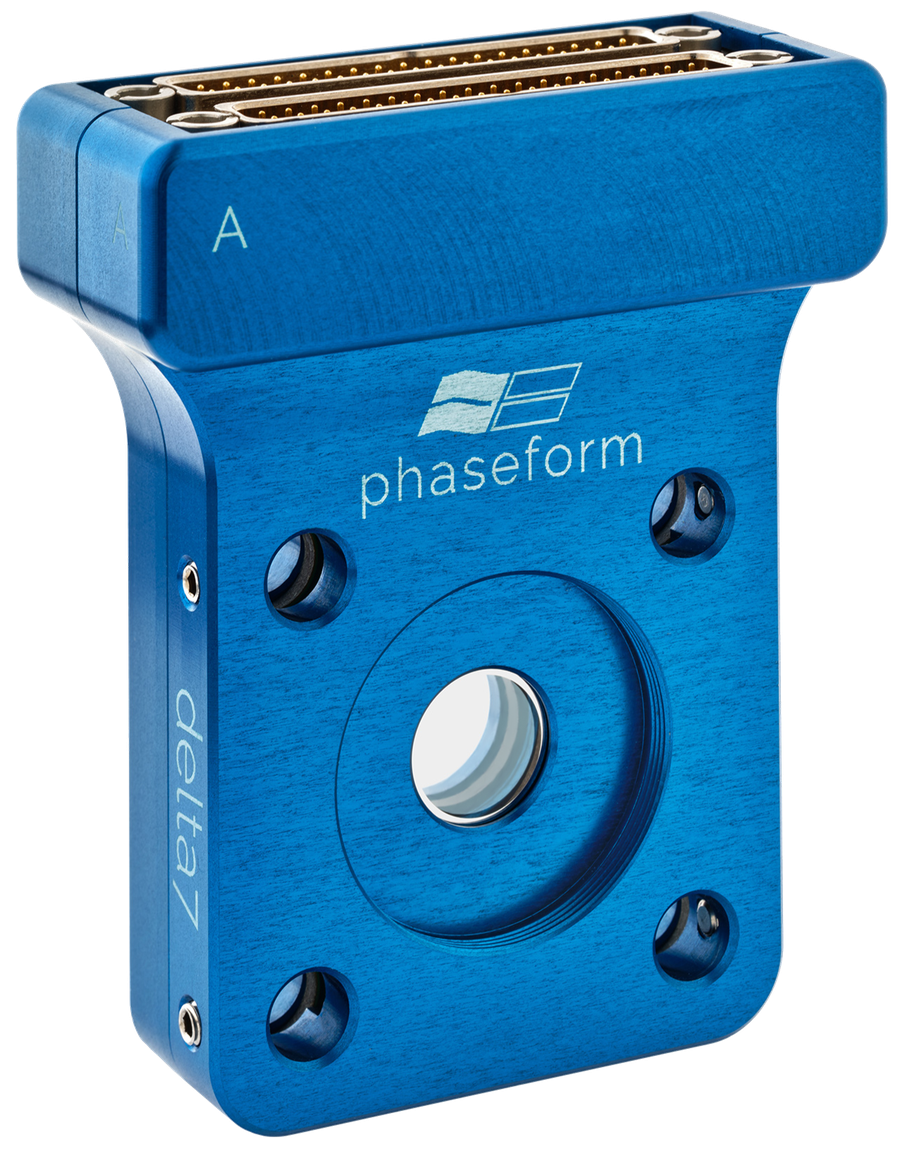
Delta 7-1010 mm clear aperture · 63 electrodes · 7th radial Zernike order |
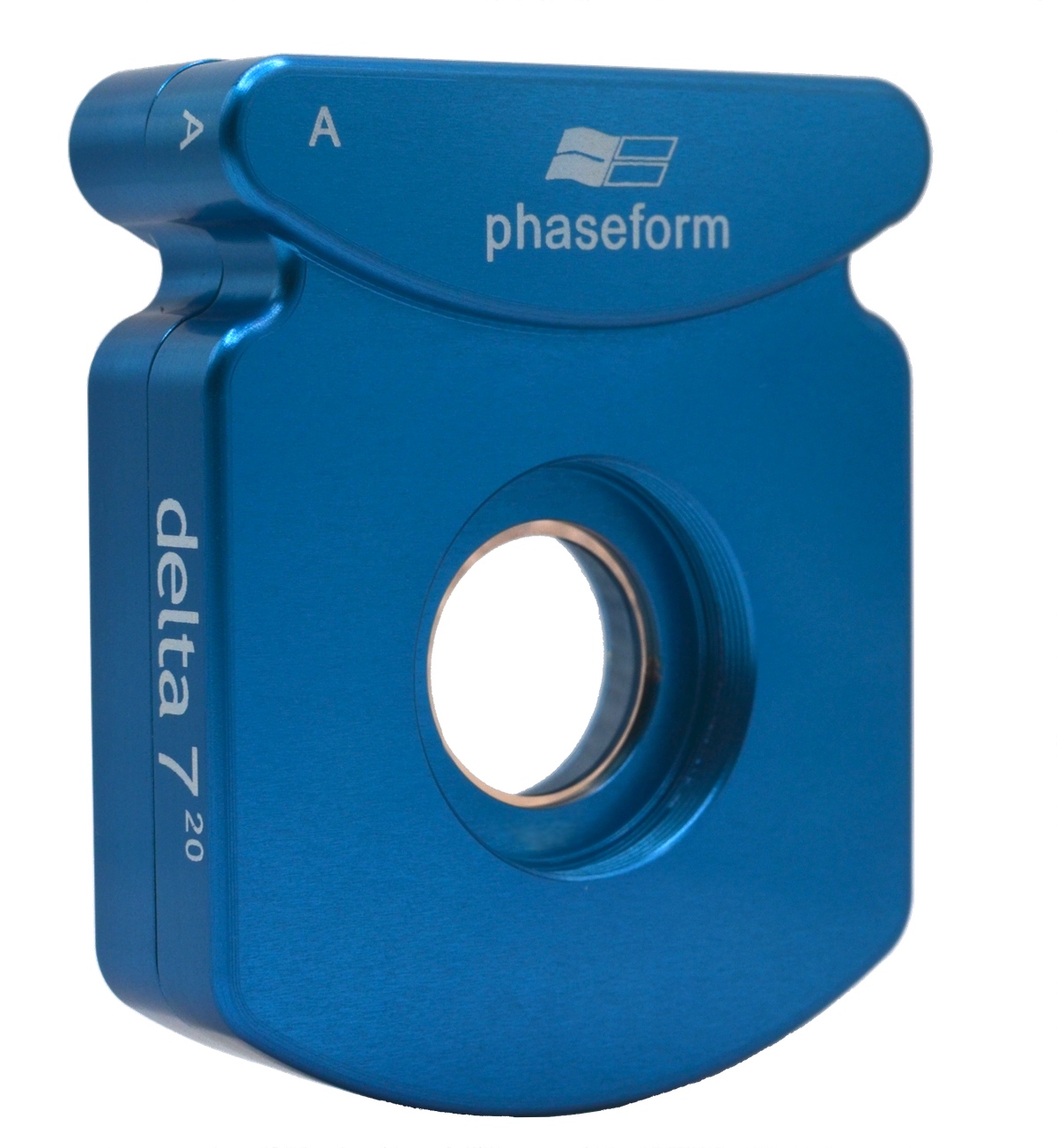
Delta 7-2020 mm clear aperture · 63 electrodes · 7th radial Zernike order |
|---|
DPP technology
Built on the Deformable Phase Plate
The Deformable Phase Plate (DPP), developed by Phaseform GmbH, is a fluidic chamber enclosed by a thin membrane, which is deformed by electrostatic force. The force is generated by a 2D array of transparent electrodes embedded within the optical aperture.
Key features
- Complex wavefront modulation
63 electrodes enabling replication of up to the 7th radial order of Zernike polynomials (35 modes) with high fidelity
- Straightforward system integration
Compact housing for standard optomechanics: 30 mm cage systems via rods, lens tubes and post assemblies
- Linear & hysteresis-free response
Electrostatic actuation suited for open-loop wavefront control
- Remarkable optical quality
Active best flat with an induced RMS wavefront error of less than λ/40 in any DPP orientation
- Polarization-independent
Wavefront modulation independent of the light polarization for maximized efficiency
Delta 7 at a glance
Both apertures share the same optics, electronics and software. Pick one to read it on its own, or compare them side by side.
Specific to the Delta 7-10
| Clear aperture diameter | 10 mm |
|---|---|
| Maximum peak-to-valley | > 7 µm |
| RMS wavefront error of best flat | < 15 nmorientation independent |

Mounting
- Orientation
- Arbitrary — horizontal and vertical standard, other orientations upon request
- Interface
- 30 mm cage system rods, SM1 tubing and ⌀ 1/2″ posts
Specific to the Delta 7-20
| Clear aperture diameter | 20 mm |
|---|---|
| Maximum peak-to-valley | > 10 µm |
| RMS wavefront error of best flat | < 15 nmDPP horizontal, optical axis vertical |
 Mounting
- Orientation
- Recommended horizontal only (optical axis vertical)
- Interface
- Native M32 × 0.75 female threading — custom female-to-male thread adapters for other standard optics threads upon request
General
- 63 electrodes electrostatically actuate the optofluidic DPP (Deformable Phase Plate)
- Connected via USB 2.0
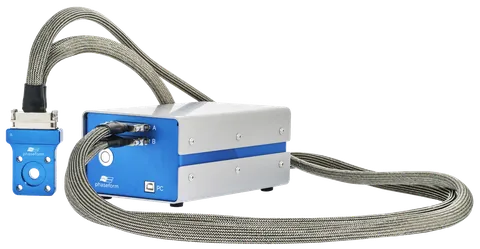
- Included: driving electronics, control software, cables and manual
- Pre-calibrated — works in open loop
- Software: Python, MATLAB wrapper · Windows, Linux and macOS
- AR-coated membrane available as an option
Optical
- Maximum spatial frequency of modes: 7th radial order of Zernike modes
- Optical transmission 400 nm – 1700 nm · 80 % at λ = 500 nm
- Wavefront drift < 5 % after 60 min
- Polarization-independent operation
- Laser-induced damage threshold 10 W/cm² for 10 s @ 1070 nm CW
Mechanical
- Thickness 0.87 mm within the clear aperture
- Response time < 40 ms — best flat to maximum deformation
- Hysteresis < 1 %
- Linearity > 92 %
Measured performance
Open-loop replication of Zernike modes — radial orders 1 to 7, 35 modes on both apertures.
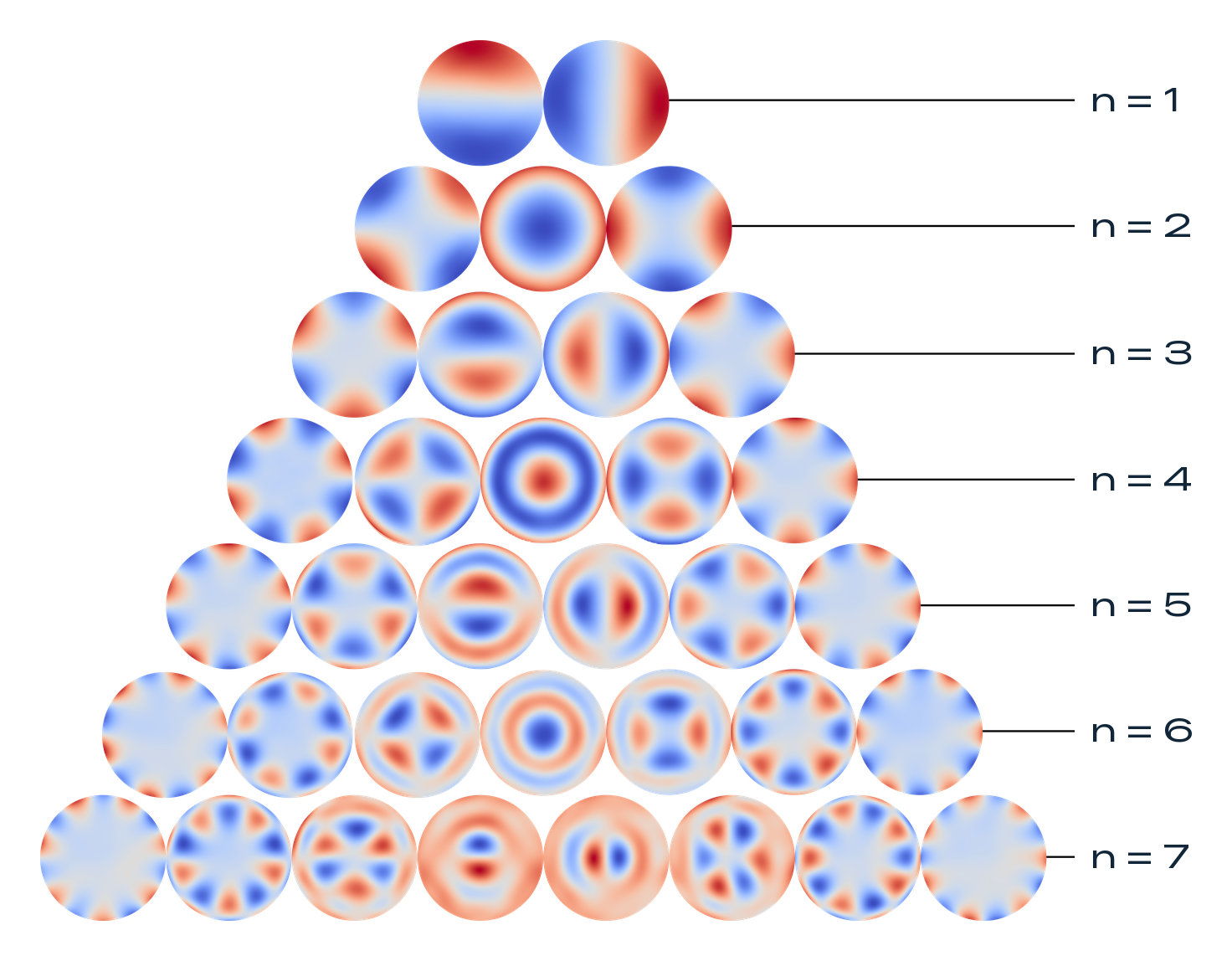
Delta 7-10 — 10 mm clear aperture
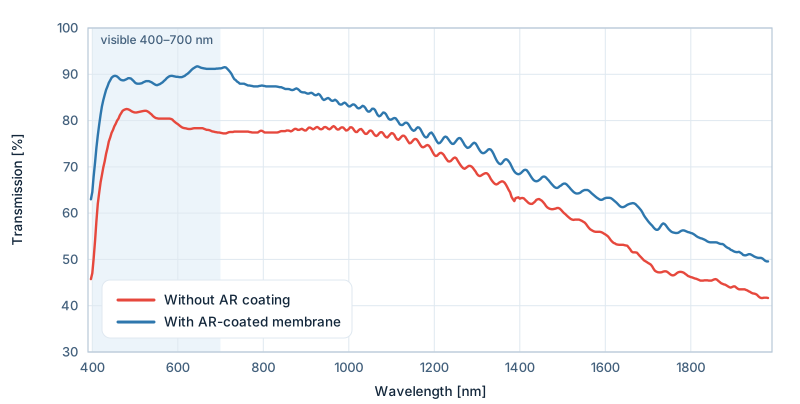
Optical transmission versus wavelength — identical for both apertures. The AR-coated membrane is available as an option.